

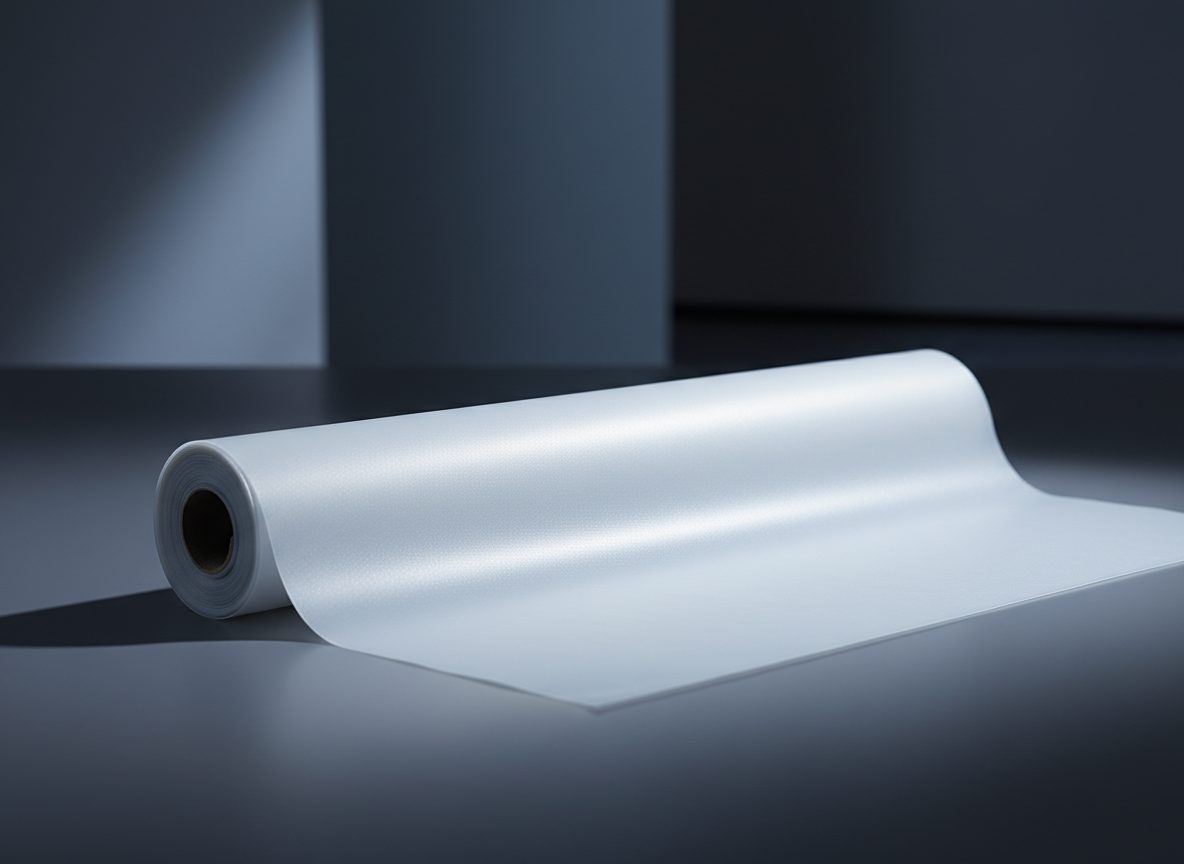
PDLC stands for Polymer Dispersed Liquid Crystal, and the whole product is really three thin layers laminated together. Two outer layers are clear PET film coated with a hair-thin conductive layer (ITO) — invisible to the eye, but electrically active. Sandwiched between them is the working layer: millions of microscopic liquid-crystal droplets suspended in a polymer matrix, like a very orderly emulsion.
Off: scattered, frosted, fail-safe
With no power applied, those liquid-crystal droplets point in every direction at random. Light hitting the film scatters in as many directions as the droplets are pointing, and the glass reads as an even, elegant frost — nothing sinister, just optics. This is also why PDLC is fail-safe by nature: if the power cuts, the film has no voltage to hold anything aligned, so it reverts to frosted on its own. You never end up accidentally on display because a breaker tripped.
On: aligned, clear, in about 0.3 seconds
Apply a safe, low AC voltage across the two conductive layers and every one of those droplets snaps into alignment with the electric field, all pointing the same way. Light now passes straight through instead of scattering, and the panel reads as ordinary clear glass. That transition takes about 0.3 seconds in either direction — closer to a light switch than a motorised blind.
What actually shortens a film's life
A few things worth knowing before you buy: power draw is genuinely small, around 5W per square metre, so running a large panel costs less on your electricity bill than most people expect. Lifespan is rated at 10+ years of daily switching, and the two biggest factors that shorten it are UV exposure on unprotected film and poorly regulated voltage from a cheap driver — which is exactly why we spec our own transformers rather than whatever ships in a generic kit. Cheap controllers under- or over-drive the voltage, and over years that degrades the liquid-crystal alignment faster than the film itself ages.
The Numbers
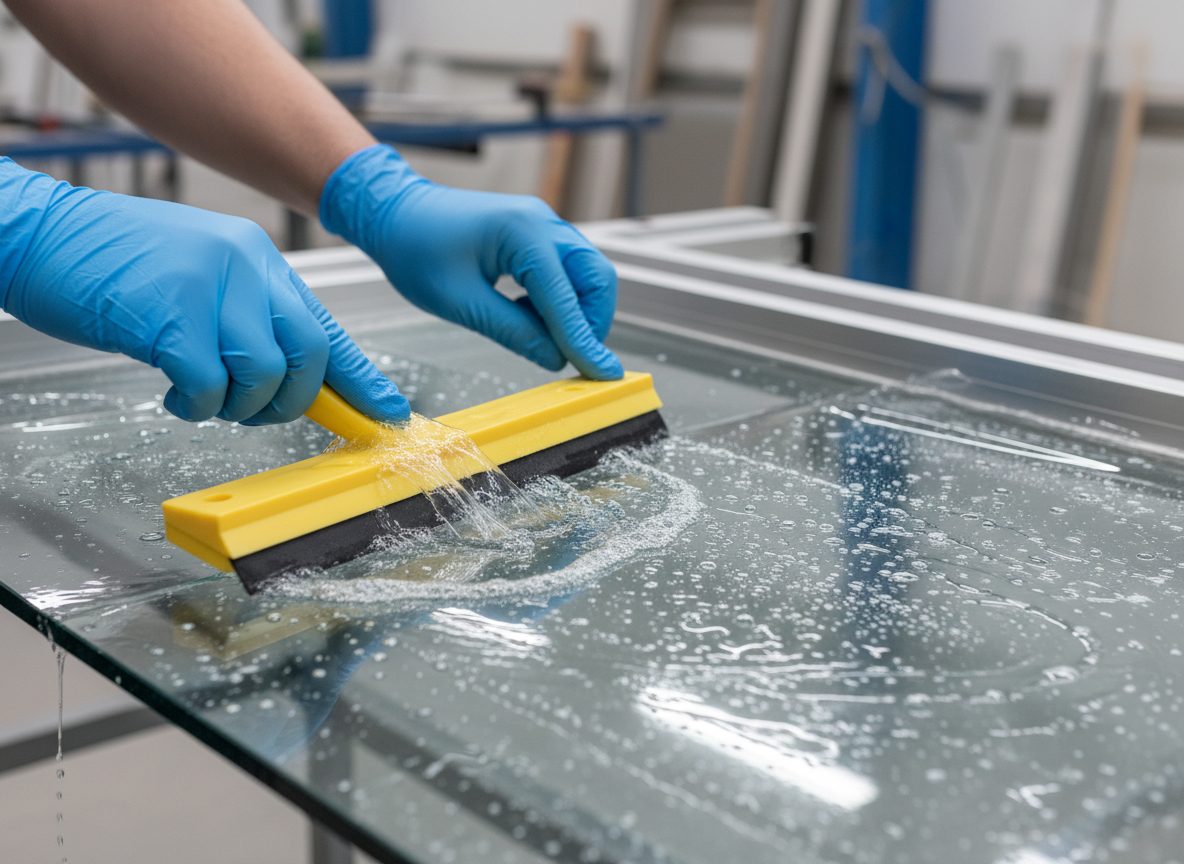
Installation matters as much as the film grade. Lamination has to be bubble-free and edge-sealed, or moisture and dust work their way in at the seam over time — this is why we don't sell film without professional install attached.
The bonus nobody expects
Because frosted PDLC is a genuinely diffuse white surface, it doubles as a serviceable rear-projection screen — point a projector at a frosted panel from behind and you've got a screen that was, a second ago, just a wall. It's not a trick specific to one film grade; any PDLC panel does this the moment it's frosted, which is why the same wall shows up doing double duty across storefronts, cabins and conference rooms elsewhere in this Journal.