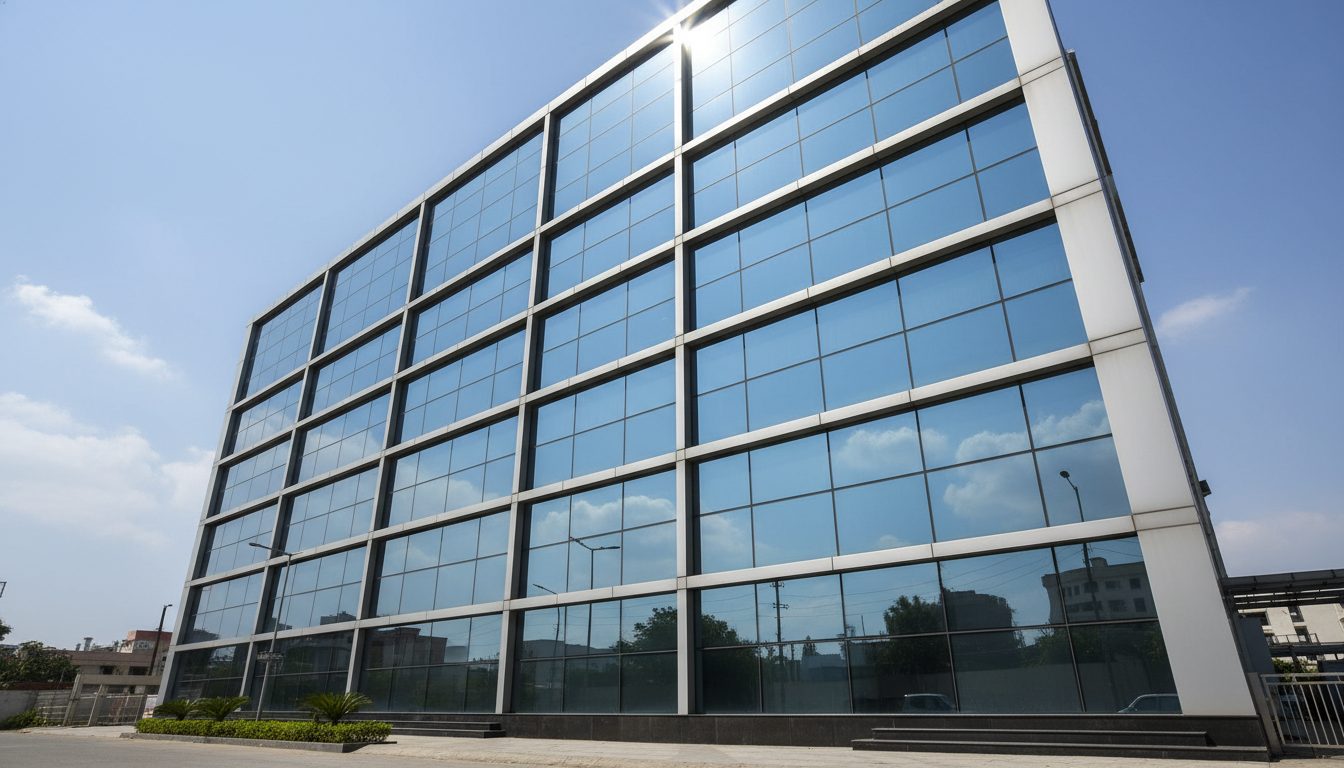
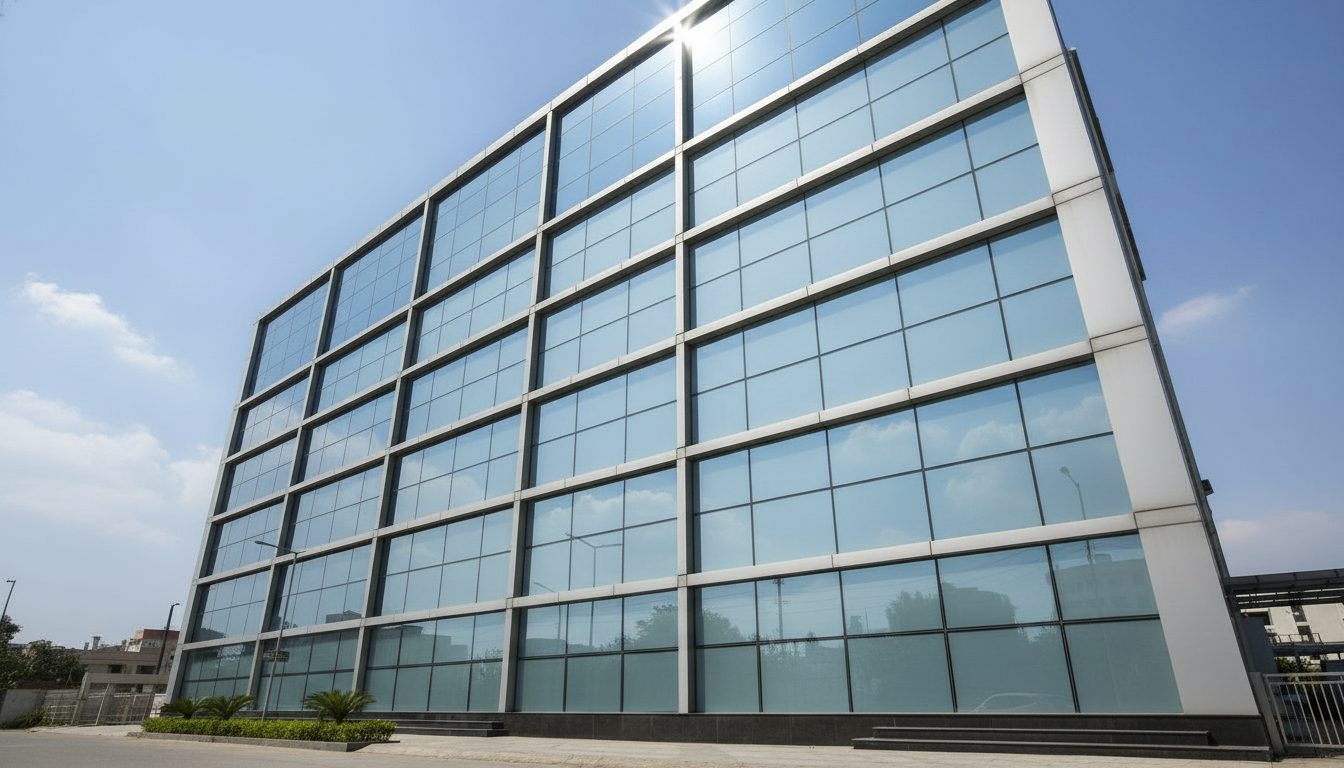
Indian summers are punishing on large glass facades, especially anything facing south-west. Direct glare forces occupants to close curtains and shades that were never part of the design intent, and every one of those improvised covers is a small daily admission that the facade wasn't built for the sun it actually gets. PDLC film blocks roughly 99% of incoming UV outright, and switching sections to frosted scatters direct glare and radiant heat at the glass line — before it becomes a cooling problem three metres into the room.
What it does — and what it doesn't
We'll be straight about what this does and doesn't do: PDLC is primarily a privacy-and-glare control, not a full thermal-performance upgrade the way electrochromic glass or a proper double-glazed unit is. What it reliably delivers is glare relief and a meaningful reduction in the ad-hoc curtains, blinds and window film that occupants otherwise install themselves — plus a modest easing of AC tonnage from cutting radiant load at peak sun hours. For a facade-heavy building chasing serious energy numbers, we usually recommend pairing PDLC with a double-glazed unit rather than expecting the film alone to carry full thermal performance.
Execution and structure
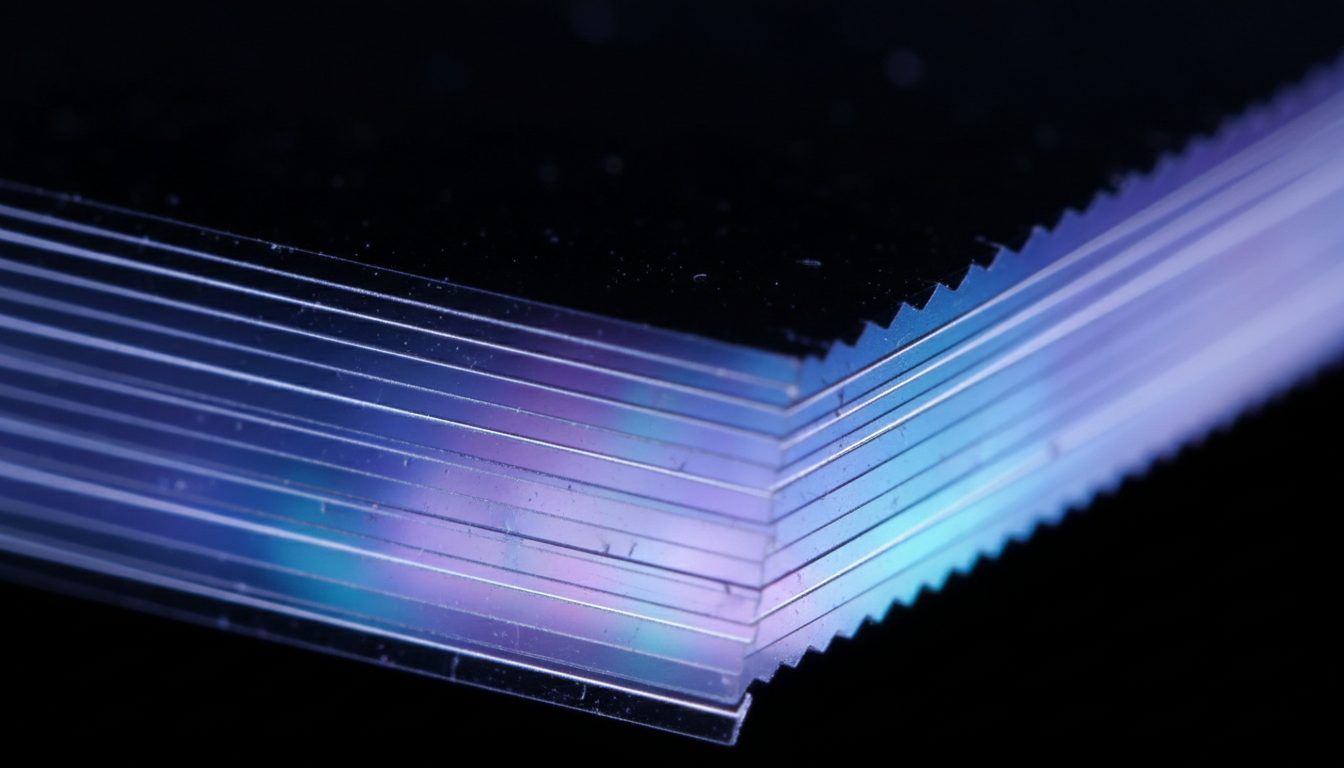
On execution: facade panels tile the same way storefronts do, constrained by lamination width, so plan the mullion grid around roughly 1.5m panel widths and get a facade engineer's sign-off on the added dead load and wind-load path before committing. Selective, zoned frosting also opens up a genuinely architectural move — alternating clear and frosted panels in a deliberate checker pattern, which we've used on a corporate lobby facade to control light section-by-section while reading as an intentional design gesture rather than a retrofit.
Control and zoning
For control, wire by facade zone or floor into the building's BMS, run dawn/dusk schedules, and — where budget allows — trigger frosting from a glare or sun-angle sensor rather than a fixed clock. That's the difference between a facade that frosts on a rigid timetable and one that responds to the actual sun position on a given day.
Facade — Typical Spec (Per Elevation)
At facade scale, per-sq-ft film cost drops meaningfully with order size — a full elevation prices out considerably better per panel than a single window, so the economics improve the bigger the glazed area gets.
Get the mullion grid, the load sign-off and the control zoning right at the design stage, and a PDLC facade upgrade reads as a deliberate architectural layer rather than a bolt-on fix for a sun problem the original glazing never accounted for.